Discover Tea Knowledge
For those who see more in tea.
Tea is diverse, nuanced, and rich in history. In our knowledge section, we offer insights into origin, variety, processing, and preparation. From black and green tea to herbal infusions, oolong, and fruit blends—this is where you will find background, orientation, and inspiration, all centred around the subtle art of distinction.

The legend tells of a day nearly 5,000 years ago in ancient China, when Emperor Shen Nong—a wise ruler and devoted scholar of plants—rested beneath a wild tea tree. As his servant heated water over an open fire, a gentle breeze carried a few leaves into the steaming pot.
Curious and open to new experiences, the emperor tasted the infusion. He was struck by its delicate aroma and invigorating effect.
Thus, it is said, tea was born by chance—a simple moment that would go on to shape cultures across the world.

At the heart of every true tea lies a single plant: Camellia sinensis. From its tender leaves emerge green, black, white, and oolong teas—not through different species, but solely through the method and duration of processing.
The tea plant is both resilient and demanding. It grows slowly, thrives in humid climates, and flourishes under careful cultivation. Its leaves hold delicate tannins, essential oils, and natural aromas—the foundation of tea’s remarkable diversity.
Unassuming in appearance, yet profound in effect: Camellia sinensis is the origin of a beverage valued around the world—for its clarity, depth, and quiet elegance.

Green tea is considered the most original expression of tea. After harvesting, the leaves are gently heated—traditionally through steaming or pan-firing—and remain unoxidised. This careful process preserves their natural components and delicate green nuances.
Its character is defined by a fine, fresh aroma: at times grassy and light, at others subtly nutty or marked by a hint of umami. Green tea offers a gentle sense of clarity—invigorating without intensity, making it ideal for a mindful start to the day or quiet moments in between.
Its range extends from soft, delicate varieties to more expressive and profound infusions. What unites them is the pure expression of the leaf—unadulterated, precise, and in harmonious balance.


White tea embodies purity, subtlety, and restraint. Only the youngest buds and tender leaves—covered in fine, silvery down—are carefully hand-picked and gently air-dried, without rolling or oxidation.
The result is an exceptionally soft infusion, pale in the cup and refined in character. Its flavour is light, smooth, and often gently floral—marked by a quiet clarity that evokes fresh blossoms and pure water.
Naturally low in caffeine and known for its gentle nature, white tea is ideally suited to calm, mindful moments. A tea that does not seek attention—yet leaves a lasting impression.

Oolong tea exists between green and black tea—partially oxidised, layered, and marked by remarkable depth. Its production requires refined craftsmanship: the leaves are carefully oxidised, repeatedly rolled, aerated, and gently roasted until their full complexity emerges.
In the cup, Oolong reveals a striking versatility—ranging from light and floral to smooth, nutty, and almost creamy. Some varieties evoke fresh orchids, others recall roasted chestnuts or ripe fruit.
With a moderate caffeine content, Oolong is well suited to mindful moments of enjoyment and can be infused multiple times. A tea for those who appreciate nuance—and for those who seek depth in subtlety.

Matcha is finely ground green tea—intense, vibrant, and at the same time remarkably clear. Only carefully shade-grown tea leaves, known as tencha, are used in its production. They are gently steamed, dried, and then stone-ground into a fine powder.
Unlike other teas, matcha is not infused but fully whisked into water. The entire leaf is thus consumed—bringing its full spectrum of flavour, natural components, and energy into the cup.
Its taste is rich, slightly astringent, and softly creamy. Matcha offers a sustained sense of vitality, supports focused attention, and holds a central place in Japanese tea culture as a symbol of mindfulness, presence, and respect.
A tea not simply to be enjoyed—but to be consciously experienced.

Strictly speaking, herbal and fruit infusions are not “tea,” as they do not contain leaves from the Camellia sinensis plant. Instead, they are infusion-based beverages—crafted from blossoms, leaves, fruits, bark, or spices.
Yet they have long been an integral part of tea culture. Their diversity of flavour is remarkable, ranging from fresh and invigorating to soft and soothing. Ingredients such as camomile, mint, lemon verbena, or hibiscus unfold their character naturally—clear, authentic, and unadulterated.
Whether enjoyed pure or as finely balanced blends, herbal and fruit infusions invite moments of mindful enjoyment. A gentle companion throughout the day—and a tribute to the richness of nature.
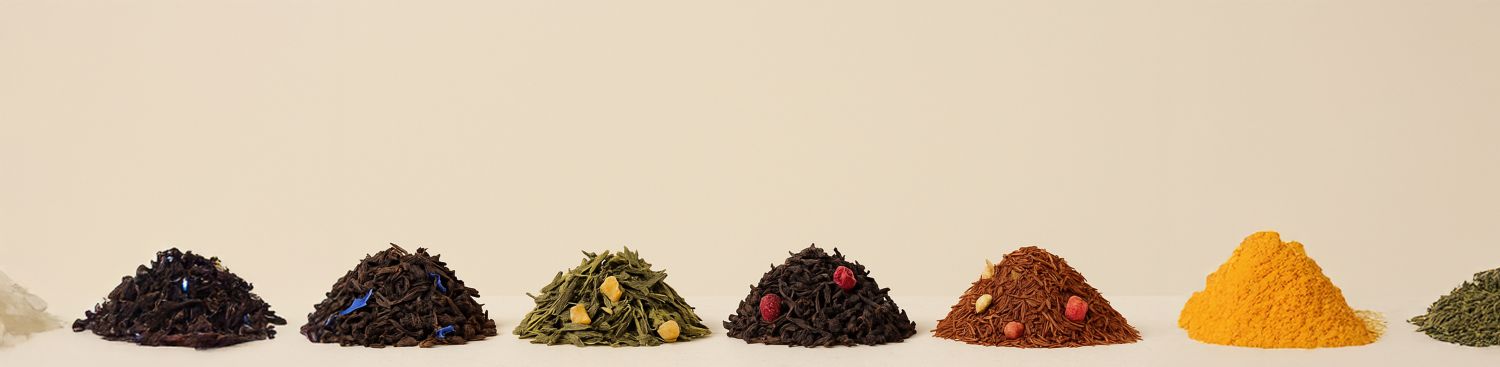
Flavoured teas bring together the world of true tea with carefully selected aromas. Typically based on green or black teas, they are refined with natural additions such as blossoms, spices, fruit pieces, or essential oils.
The aim is not to overshadow, but to create balance. A hint of bergamot, a delicate note of vanilla, or subtle fruit accents can add depth—while preserving the tea’s original character.
Well-composed flavoured teas are layered, clear, and harmonious. They offer space for creativity and open new paths of enjoyment—for those who appreciate variety without compromising on quality.

A fine cup of tea begins with thoughtful preparation. The key factors are water temperature, tea quantity, and infusion time—rather than whether the tea is loose or in a bag.
Delicate varieties such as green or white tea require water at around 70–80°C, while oolong can tolerate slightly higher temperatures. Black tea, as well as herbal and fruit infusions, раскры their full character at 95–100°C.
For a cup (180–400 ml), one tea bag or approximately 2–4 grams of loose tea is generally sufficient. It is essential that the leaves have enough space to unfold, and that the water is fresh and as soft as possible.
Infusion times vary by type: green tea typically steeps for 2–3 minutes, black tea for 3–5 minutes, and herbal infusions often a little longer. The result is a balanced and nuanced cup—clear, composed, and full of character.

Tea is cultivated in many parts of the world—yet depending on region, climate, and soil, the leaves develop distinctly different aromatic profiles. Almost all tea comes from the same plant, Camellia sinensis. What sets it apart is its origin.
Whether grown in the misty highlands of Darjeeling, along the gentle slopes of China, or in the tropical gardens of Sri Lanka—each region lends the tea its own expression.
Altitude, humidity, sunlight, and even the timing of the harvest all influence flavour and aroma. From the same plant emerge teas with delicate floral notes, full-bodied depth, or vibrant freshness.
Herbal and fruit infusions also reflect regional diversity: peppermint from Europe differs in character from North African mint, just as lemongrass from Thailand reveals different nuances than that from South America.
Origin is no coincidence—it is an essential part of a tea’s identity, and what distinguishes the exceptional from the ordinary.